
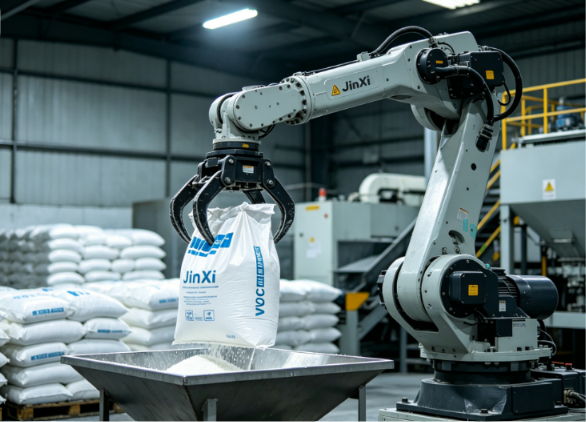
Robotic Arms in PVC Manufacturing: Solve Labor Issues & Boost Production Efficiency
In the competitive PVC industry, manual labor has long been the backbone of production processes like profile handling, pipe fitting assembly, and injection molding loading/unloading. However, rising labor costs, inconsistent product quality, and safety risks have become major bottlenecks for manufacturers. Robotic arms have emerged as a game-changing solution, addressing these pain points while driving operational efficiency and scalability. This article explores the limitations of manual work in PVC production and the transformative advantages of integrating robotic arms.
The Hidden Costs of Manual Labor in PVC Production
Manual operations in PVC manufacturing—from material handling and assembly to quality checks—suffer from inherent flaws that hinder long-term growth. These issues not only increase operational costs but also compromise product competitiveness in the market.
| Aspect | Manual Labor Disadvantages in PVC Industry |
|---|---|
| Product Quality | High inconsistency in cutting, assembly, and fitting; sub-millimeter precision impossible; high reject rates from human error. |
| Production Efficiency | Slow, variable cycle times; frequent breaks/shift changes limit output; 24/7 operation unfeasible. |
| Labor Costs | Rising wages, training, and overtime expenses; high turnover for repetitive tasks; costly worker compensation claims. |
| Workplace Safety | High risk of musculoskeletal disorders from lifting heavy PVC profiles/pipes; exposure to hot materials/chemicals. |
| Scalability | Slow to adapt to demand spikes; hiring/training new workers delays production expansion. |
How Robotic Arms Transform PVC Profile Handling & Assembly
Robotic arms address the core limitations of manual labor by delivering precision, consistency, and flexibility. Designed for repetitive, high-precision tasks, they excel in PVC profile loading, pipe cutting, fitting assembly, and palletizing—areas where manual work is most inefficient.
Equipped with advanced sensors and programming, robotic arms achieve sub-millimeter repeatability, ensuring every PVC profile is cut, drilled, or assembled to exact specifications. Unlike human workers, they maintain consistent speed and accuracy for 24 hours a day, eliminating quality fluctuations caused by fatigue or skill gaps. This reliability reduces material waste by up to 30% and lowers reject rates, directly boosting profitability.
Key Benefits of Robotic Arms for PVC Pipe Manufacturing
For PVC pipe producers, robotic arms streamline critical processes like injection molding machine tending, pipe trimming, and coupling assembly. These automated solutions deliver unmatched advantages that align with industry demands for cost reduction and quality improvement.
First, robotic arms cut labor costs significantly by replacing 3–5 workers per production line, with a typical ROI of 12–18 months. Second, they enhance workplace safety by handling heavy, hot, or hazardous materials, reducing injury risks and insurance premiums. Third, their compact, flexible design integrates seamlessly into existing production lines, requiring minimal layout changes. Collaborative robots (cobots) even work safely alongside human workers, optimizing workflow without full line shutdowns.
Conclusion
The PVC industry’s shift from manual labor to robotic arm automation is no longer optional—it’s essential for survival in a competitive market. By eliminating quality inconsistencies, reducing labor costs, and enabling 24/7 production, robotic arms empower PVC manufacturers to scale operations, improve product quality, and stay ahead of industry trends. As automation technology advances, integrating robotic arms will become the standard for PVC production, driving innovation and growth across the sector.
Get more information:WhatsApp”+8619117023998
Email:grace.lee.friendly@gmail.com