
Core Advantages of JinXi Robotic Arms vs. Traditional Robotic Arms
Introduction
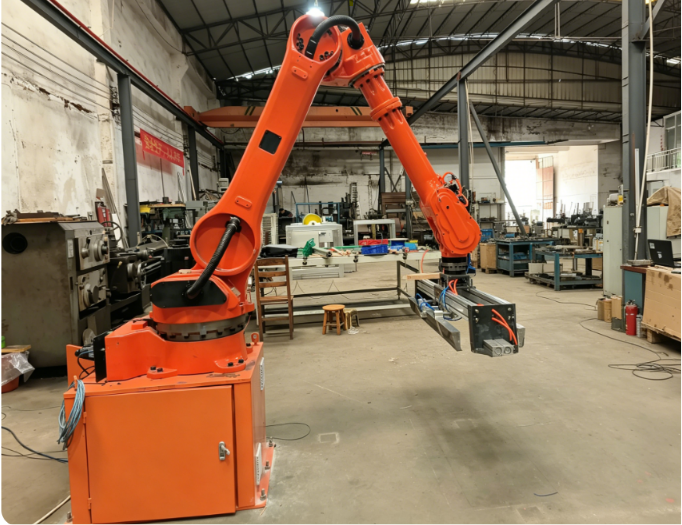
Traditional robotic arms have obvious drawbacks in modern industrial automation. They feature rigid structures and single recognition functions. They also require complex installation and show poor adaptability to harsh environments. These flaws make them unable to match modern factories’ demands for flexibility, safety, efficiency and cost savings. In contrast, JinXi collaborative robotic arms break through the core technical bottlenecks of traditional equipment. They achieve comprehensive upgrades in safety operation, load capacity, flexible grabbing, environmental resistance and rapid deployment. This article clearly analyzes the core competitive strengths of JinXi robotic arms through detailed comparison and in-depth explanation.
Performance Comparison: JinXi Robotic Arms vs. Traditional Robotic Arms
|
Comparison Dimension
|
Traditional Robotic Arms
|
JinXi Collaborative Robotic Arms
|
|---|---|---|
|
Safety & Deployment
|
Mandatory safety fence installation required; large-scale factory renovation needed; high deployment cost; humans and machines cannot operate synchronously, resulting in low space utilization
|
Built-in collision force detection system, fence-free design; supports synchronous human-machine operation; no large factory modification required, enabling rapid landing of unpacking, packing and palletizing stations
|
|
Load & Operation Efficiency
|
Limited load range of 25–40kg; short arm span; low operating efficiency, unable to adapt to heavy-duty continuous production
|
Ultra-large load up to 210kg with over 3-meter arm span; equipped with high-precision reducers, supporting a maximum output of 180 bags per hour, suitable for high-intensity mass production
|
|
Grasping Flexibility
|
Only grasps standardized cartons and woven bags; prone to jamming with irregular or offset materials; requires frequent manual program debugging
|
Equipped with AI 3D vision system, automatically identifies offset materials and multi-size packages; freely switches SKUs without repeated manual calibration
|
|
Environmental Adaptability
|
Ordinary structure without explosion-proof and dust-proof functions; vulnerable to corrosion and high temperature, unable to adapt to harsh production workshops
|
Adopts high-temperature heat treatment, anti-corrosion coating and explosion-proof motor; perfectly adapts to dusty, corrosive and flammable chemical production scenarios
|
|
Application & Service
|
Single functional module; poor compatibility with old production lines; simple system with no targeted overseas after-sales support
|
Modular design compatible with new and old production lines; multi-language control system; provides localized installation, training and after-sales warranty for Southeast Asian markets
|
Core Technical and Application Advantages of JinXi Robotic Arms
First of all, JinXi takes the lead in safety and field deployment with its exclusive collision force sensing technology. Traditional robotic arms rely on physical fences to isolate workers, which wastes factory space and increases renovation costs. However, JinXi’s built-in detection system achieves real-time force induction. It stops operation immediately when touching obstacles. Therefore, it completely cancels fence installation and supports synchronous human-machine work. This design greatly saves factory transformation investment. It also improves space utilization and overall workstation efficiency for unpacking, packing and palletizing tasks.
Secondly, JinXi upgrades load capacity and production efficiency to match heavy-duty industrial needs. Most traditional robotic arms only support 25kg to 40kg loads with short working spans. They cannot sustain long-term high-intensity production. On the contrary, JinXi robotic arms reach a maximum load of 210kg and a 3-meter-plus ultra-long arm span. With high-precision reducer configurations, they stably complete 180 bags of unpacking work per hour. For this reason, they fully meet the high-frequency and large-volume production demands of food and chemical manufacturing enterprises.
Thirdly, the independent AI 3D vision system solves the flexible grabbing pain points of traditional automation equipment. Traditional robotic arms can only identify standard and regular packaging materials. They often jam or fail when facing offset or irregular items, and workers must debug programs repeatedly. In comparison, JinXi’s intelligent vision module conducts automatic positioning and identification. It adapts to cartons, woven bags, wood materials and various non-standard packages. Meanwhile, it realizes free SKU switching without manual calibration, which truly supports unattended and flexible production.
Furthermore, JinXi optimizes structural design for harsh and high-risk production scenarios. Many chemical and building material factories have dust pollution, corrosive materials and flammable environments. Traditional robotic arms lack explosion-proof and dust-proof functions, so they are easy to damage and cause safety risks. In order to solve these problems, JinXi adopts high-temperature heat treatment and anti-corrosion coating. It is also equipped with professional explosion-proof motors. This configuration effectively avoids equipment failure and production accidents. It also eliminates occupational diseases and safety hazards caused by manual operation in harsh workshops.
Finally, JinXi provides systematic and localized supporting solutions for global industrial upgrading. Apart from single robotic arm equipment, the brand launches integrated solutions for multiple scenarios. These solutions include heavy-load collaborative palletizing stations, AI vision flexible grabbing workstations and dust-proof explosion-proof unpacking lines. Additionally, the modular design fits both new and old production lines to lower transformation thresholds. To serve overseas clients better, JinXi equips devices with multi-language systems. It also supplies localized installation, training and after-sales services for Southeast Asian regions. Thus, it has become a reliable automation partner for local chemical and food processing enterprises.